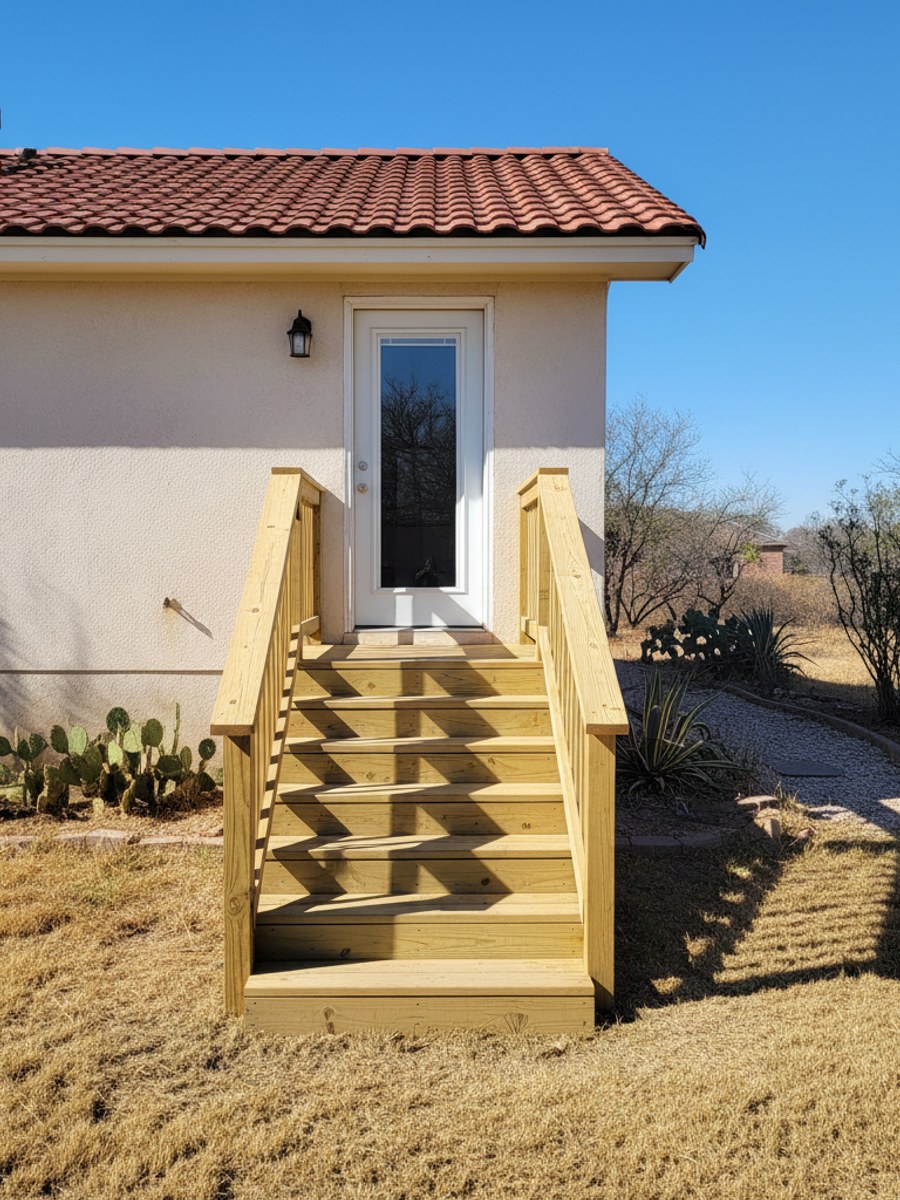
A deck looks simple once it's finished. Boards, rails, maybe some steps down to the yard. What you don't see is the ten or so things that decide whether that deck is still solid in eight years or whether it's sagging at one corner because nobody checked what was under it. Here's what actually matters before the first post hole gets dug.
What's in the ground
1. The soil under your footings
Most lots around Edinburg sit on Hidalgo County clay, often with a caliche layer somewhere between 18 and 24 inches down. Clay like this swells when it's wet and shrinks hard when it dries out, which is exactly what it does every summer. A footing that's too shallow will heave or settle unevenly over a few seasons, and you'll see it in a rail that's suddenly out of plumb. We dig past that movement zone, usually 24 to 36 inches depending on what the soil's doing on your specific lot, and we'd rather hit caliche with an auger bit than guess.
2. What's already buried there
Old patio slabs, broken sprinkler line, a chunk of concrete from a fence post poured in 1985 and never pulled. Older neighborhoods closer to downtown Edinburg and the UTRGV area have had fifty, sixty years of people doing their own yard work, and a lot of that is still in the dirt. Call 811 before anyone digs. It's free and it's the law, not a suggestion.
Water has to go somewhere
3. Grading and runoff
June through September brings heavy rain here, sometimes a few inches in an hour when a tropical system rolls through. If your yard is flat or pitched toward the house, a new deck can trap water against the foundation or turn the space under it into standing mud. We want to see which way the lot actually drains before we set a single post, not after.
4. The ledger board and the house wall
If the deck is attaching to the house, that ledger board needs flashing behind it, not caulk smeared over the top. Stucco, brick veneer, and hardiplank each need a different approach to get water to shed away from the house instead of running down behind the siding. This is the single most common point of rot failure on an attached deck, and it usually takes years to show up as a soft spot you can push your thumb into.
Permits and property lines
5. What the city actually requires
Decks in Edinburg generally need a permit through the city's building department if you're inside city limits, with inspections at the footing stage before concrete goes in and again before the decking covers the framing. If your property is in unincorporated Hidalgo County the process runs through the county instead. Either way, skipping it isn't a shortcut, it's a problem for whoever tries to sell the house later and finds no permit on file for a structure attached to it.
6. Setbacks and HOA rules
Newer subdivisions out toward Alamo and north Edinburg almost always have an HOA with its own rules on deck height, railing style, and how close you can build to the property line, separate from whatever the city allows. A quick pull of your plat or a call to the HOA before design saves a redesign later. Older lots with no HOA still have city setback rules, just nobody's enforcing them until a neighbor complains.
What's already attached to the house
7. Buried utility lines near the slab
Irrigation lines, low-voltage landscape wiring, sometimes a gas line running out to an old grill hookup. These don't always show up on a locate ticket if a previous owner ran them without a permit, which happens more than you'd think on older streets.
8. The age of the house framing
Houses built in the 1960s and 70s around central Edinburg weren't built with deck ledgers in mind, so the rim joist or the wall structure sometimes needs reinforcement before you can lag a ledger board into it safely. Newer homes from the last fifteen or twenty years usually have more standard framing to work with, which makes an attached deck a more straightforward job.
Material choices for this climate
9. Fasteners and lumber chemistry
Pressure-treated lumber today is treated with copper-based chemicals that eat through plain galvanized fasteners over a few years. You want hot-dip galvanized rated for ACQ contact, or stainless where the board meets the ledger. It's a small cost difference up front and a big difference in whether your rail posts are still solid in year six.
10. How the material handles Texas heat
Composite decking will get hot enough in July to be uncomfortable barefoot, and it expands and contracts more than wood does across a hot afternoon and a cooler night. Boards need to be spaced with that movement in mind, usually an eighth to three-sixteenths of an inch between boards, or you'll get buckling by the second summer. Wood decking doesn't move as much but needs a finish that can stand up to UV, not just water.
None of this is complicated, but it's the kind of thing that's expensive to fix after the fact and cheap to check before anyone starts digging. If you want a second set of eyes on your lot before you commit to a design, that's the kind of walk-through Allied Deck Solutions does as a matter of course, not an upsell.